


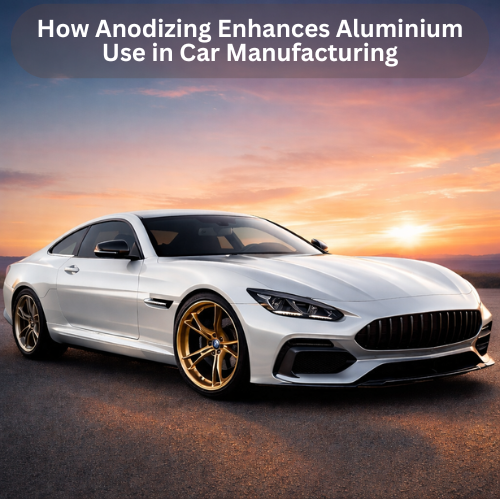
The automotive industry is shifting rapidly towards lighter, more efficient, and more sustainable materials. Anodized aluminium has emerged as a key technology in car manufacturing because it offers a rare mix of lightweight construction, corrosion-resistance, durability, aesthetics, recyclability, and performance-enhancing surface properties.
What Is Anodizing & Why It Matters
Anodizing is an electrochemical surface treatment applied to aluminium to thicken its oxide layer. The aluminium part becomes the anode inside an electrolyte solution (commonly sulfuric acid for Type II anodizing).
During the process:
- Surface is cleaned and etched
- Part is submerged in acid
- Electrical current forms aluminium-oxide
- Layer is sealed
- Optional colouring or dyeing
This controlled oxide layer becomes a permanent part of metal, making it far more resistant to corrosion, wear, heat, and UV. The process does not flake or peel because the oxide bonds into the metal instead of sitting on top like paint.
Major Benefits of Anodized Aluminium in Automobiles
Anodizing is widely used because it solves multiple engineering challenges simultaneously:
- Corrosion Resistance: Prevents oxidation, moisture attack, salt damage, and chemical exposure—perfect for exterior and under-hood conditions.
- Wear & Scratch Resistance: The oxide layer is extremely hard, protecting surfaces from mechanical wear, handling, and road abrasion.
- Lightweight Efficiency: Aluminium is already lighter than steel; anodizing protects it without adding significant weight, directly helping fuel efficiency and electric vehicle range.
- UV & Color Stability: The finish never peels, cracks, or fades. Designers can choose
- Clear
- Black
- Metallic
- Bright dip
- Interference colours
- Improved Adhesion: Paint, glue, powder coat, and decorative finishes bond better due to the porous oxide layer.
- Environmentally Sustainable: Aluminium is recyclable, and the anodizing layer is non-toxic and stable—ideal for sustainability-focused manufacturing.
Where Is Anodizing Used in Automotive Components
Today almost every area of modern cars touches anodized aluminium in some form:
Exterior & visual
- Trims
- Grilles
- Roof rails
- Badges
- Decorative frames
Interior functional parts
- Centre consoles
- Decorative panels
- Interior metal trims
Performance components
- Shock absorber housings
- Heat sinks
- Brake system components
- Transmission housings
- Other high wear surfaces
EV components
- Battery mounts
- Battery cooling channels
- Connectors
- Electrical housings
Why EV and Hybrid Vehicles Use Anodizing Even More
Electric vehicles rely heavily on aluminium for:
- Structural light-weighting
- Thermal conductivity
- Electrical insulation
4. Corrosion control
Anodizing improves:
- Thermal management
- Insulation
- Heat resistance
- Battery protection
- Long-term performance
This is why EV, hybrid, and performance vehicle adoption of anodized aluminium grows every year.
Type II & Type III (Hard) Anodizing
Type II Anodizing
- Sulphuric acid based
- Corrosion protection
- Wide color choice
- Decorative, architectural, exterior
Type III Hardcoat Anodizing
- Thicker
- Harder
- Extremely wear-resistant
- Ideal for:
- pistons
- brake mechanisms
- heavy-load vehicle parts
Practical Real-World Examples
Most global automotive categories use anodized aluminium including:
- Mass-market passenger vehicles
- Performance vehicles
- Electric vehicles
- Motorcycles
- Luxury interiors
- Commercial vehicle components
You’ll commonly see anodized aluminium in high-stress assemblies such as braking systems, battery enclosures, heat sinks, and interior structural fittings.
Industry Trend: Moving Away From Steel
Bigger industry trend:
- Reduce weight
- Improve range
- Meet global emission norms
- Lightweighting frameworks
- EV platform optimization
Anodizing makes aluminium a legitimate alternative to heavy steel and plated metals.
Challenges & Design Considerations
Engineers must consider:
- Alloy chemistry (iron, manganese, silicon affect layer quality)
- Surface finishing
- Chip removal machining
- Porosity
- Sealing method
- Oxide thickness tolerance
Different alloys respond differently, which makes anodizing science-driven and process-sensitive.
Conclusion
Anodizing has become one of the most crucial industrial finishing processes in modern vehicle design, helping aluminium evolve from a lightweight material into a high-performance automotive solution.
From EV battery housings to aesthetic trims, anodized aluminium provides unmatched value in:
- Durability
- Corrosion protection
- Lightweight construction
- Sustainability
- Visual appeal
- Electrical insulation
- Long-term performance
As mobility transitions to electric platforms, anodizing will remain a core enabler of automotive innovation for decades to come.
Frequently Asked Questions – FAQs
1. How can I get in touch with your team for Anodizing requirements?
You can contact us directly by emailing corporatecommunications@growel.com. Our team will be happy to assist you with your specific requirements, technical questions, or service inquiries.
2. Is there any inquiry form that I need to fill out?
Please visit our Anodizing Solutions page. Scroll to the bottom of the page — you’ll find a simple inquiry form there. Kindly fill it out, and our team will contact you shortly to assist with your requirements.
3. Is there a support email if I have questions about the website or technical issues?
Yes! For any queries related to Anodizing, please reach out to corporatecommunications@growel.com. We’ll ensure your query is resolved promptly.