


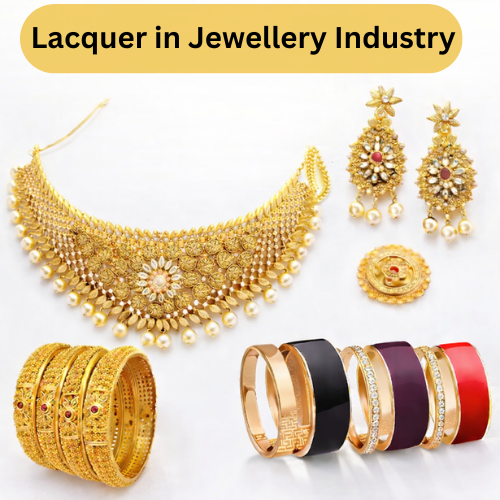
Jewellery is more than an accessory, it’s a reflection of style, craftsmanship, and emotion. Whether it’s a gold necklace, brass pendant, fashion bracelet, or zinc alloy ornament, consumers expect pieces to look radiant and remain that way for years. Behind the scenes, advanced lacquer coatings play a critical role in delivering exactly that: moisture resistance, stain resistance, a smooth finish, rich color depth, and easy cleaning.
From fine gold jewellery to costume pieces, modern lacquer systems protect surfaces, enhance shine, and extend product life — all while preserving design aesthetics. This blog explores how lacquer is used in the jewellery industry, the benefits it delivers, and why it has become indispensable for contemporary jewellery manufacturing.
Why Lacquer Is Used in Jewellery Manufacturing
Moisture Resistance
Metal jewellery, especially brass, copper, zinc alloy, and plated metals — is vulnerable to moisture from sweat, humidity, and everyday exposure. Without protection, this moisture leads to oxidation, dullness, and tarnishing.
Lacquer coatings create a protective barrier that prevents water molecules from reaching the metal surface. This moisture resistance is essential for:
- Necklace chains
- Bracelets and bangles
- Earring studs and hoops
- Medal trims and decorative ornaments
As a result, pieces maintain their original luster much longer.
Stain Resistance
The regular use of jewellery introduces contact with skin oils, cosmetics, perfumes, lotions, and environmental contaminants. These substances can cause staining, discoloration, or surface dullness.
Lacquer coatings chemically resist these staining elements, meaning jewellery remains vibrant and visually appealing even after prolonged wear. This stain resistance helps jewellery makers reduce defects, improve quality perception, and increase customer satisfaction.
Smooth Finish
A jewellery piece’s surface is directly linked to comfort and perceived quality. Sharp edges or rough metal surfaces can irritate the skin and appear unfinished. Lacquer adds a smooth, even layer that creates a soft feel and premium finish.
This smoothness is not just tactile — it visually enhances shine, making every curve and detail stand out.
Color Depth
Color-rich finishes elevate jewellery from functional to artistic. Lacquer coatings support:
- Deep, reflective metallic tones
- Uniform sheen that makes colour pop
- Pigmented effects without altering metal base
For costume or fashion jewellery, lacquer enhances color depth and makes vibrant designs stand out under different lighting conditions.
Easy Cleaning & Maintenance
Jewellery that is lacquered repels fingerprints, oils, and daily grime. Light cleaning with a soft, lint-free cloth often restores shine without harsh chemicals. Easy cleaning and low-maintenance surfaces significantly enhance consumer experience and prolong product life.
Application of Lacquer in Jewellery Components
Lacquer coatings are extensively used on:
- Necklace chains and pendants
- Bracelet links and cuff edges
- Earrings and studs
- Fashion accessory trims
- Decorative charms and tags
- Belt buckles and zipper hardware
- Watch components with metal interiors
This versatility makes lacquer one of the top finishing choices for jewellery manufacturers seeking protection and aesthetics in one solution.
Featured Lacquer Solution for Jewellery Finishing
Among modern lacquer solutions for jewellery, one product stands out for its combination of performance and decorative appeal:
GROWCLEAR GWC
- Cost-effective, water-based acrylic electrophoretic lacquer
- Low build system deposit — thickness of 6–8 µm
- Excellent dye solubility; variety of colours
- Proven golden finish with decorative additives ideal for jewellery & ornamental applications
This type of lacquer coating provides a crystal-clear protective layer that enhances metallic surfaces without hiding fine details, making it perfect for jewellery finishing operations where shine, color depth, and durability are all essential.
Benefits of Lacquer in Jewellery Manufacturing
- Long-Lasting Durability – Lacquer coatings shield jewellery from abrasion, daily wear, and exposure, ensuring pieces remain intact and attractive over time.
- Consistent Quality in Bulk Production – Manufacturers, including workshop and factory environments, rely on lacquer to deliver consistent finish quality across every piece — especially important for large inventories and export orders.
- Enhanced Customer Satisfaction – Customers expect jewellery to remain vibrant and unblemished. Lacquer delivers consistent quality, reducing returns and complaints while increasing brand trust.
- Cost-Effective Protection – Lacquer coatings require minimal material relative to the value they add. Especially in fashion and imitation jewellery segments, this makes lacquer a cost-effective protective solution.
Real-World Jewellery and Lacquer Use Cases
Many fashion brands utilize lacquer coatings on brass and zinc alloy components to prevent discoloration, reduce tarnishing, and maintain surface smoothness — boosting perceived quality without expensive precious metals.
- Fashion Jewellery Lines – Many fashion brands utilize lacquer coatings on brass and zinc alloy components to prevent discoloration, reduce tarnishing, and maintain surface smoothness — boosting perceived quality without expensive precious metals.
- Fine Jewellery with Decorative Accents – In luxury-inspired collections, lacquer is used to protect gold-plated elements and accentuate design contrast — for instance, a coloured lacquer accent next to gemstone settings provides enhanced visual depth.
- Earring and Pendant Manufacturing – Lacquer is used on backings and fasteners to ensure contact points are smooth and comfortable, reducing irritation and improving wearer experience.
Jewellery Component Manufacturing and Lacquer
Beyond ornament aesthetics, lacquer technology is also used in:
- Protecting metal fastenings under frequent movement
- Enhancing decorative trims on engraving tools
- Coating fashion accessory components such as clasps and hooks
- Safeguarding plated surfaces on hybrid materials
- Finishing jewellery boxes and display parts
This means lacquer contributes not only to jewellery design but also to manufacturing components that enhance functionality and durability.
How Lacquer Is Applied in Jewellery Finishing
Jewellery lacquer application typically involves:
- Surface Preparation – Meticulous cleaning and degreasing to remove contaminants that could impede adhesion.
- Pretreatment – Metal is treated or etched to improve lacquer bonding.
- Lacquer Application – In controlled environments, lacquer may be applied via spray or electrophoretic coating systems that ensure even, uniform layers.
- Curing – Depending on lacquer type, curing may be done through air drying or controlled heat processes, creating a strong protective film.
- Quality Inspection – Final checks for gloss, adhesion, color uniformity, and film thickness ensure premium results.
Final Thoughts: Why Lacquer Matters in Jewellery
Jewellery is both an emotional purchase and a functional accessory. Lacquer coatings provide the protective science behind the beauty — ensuring pieces stay vibrant, stand up to everyday use, and feel smooth and elegant against the skin.
The combination of moisture resistance, stain resistance, smooth finish, color depth, and easy cleaning makes lacquer an essential technology in modern jewellery finishing. As fashion trends evolve and consumer expectations rise, high-performance lacquer coatings continue to play a key role in delivering jewellery that looks exquisite and lasts for years.
Investing in lacquer-finished jewellery not only enhances aesthetics, it reflects quality craftsmanship and thoughtful protection — the hallmarks of enduring design and customer satisfaction.
Growel also provides Lacquer solutions for Gold plating, Silver plating, Palladium plating, Bronze plating, Nickel plating, Copper plating, specialized pre-treatment process, Colour gold plating, Anti-Tarnish for Silver, Electrophoretic Lacquer